If you are interested in purchasing this piece or a print, please contact me directly at s.wells.studios@gmail.com or text me at 027 262 6786
Oil on canvas
Original and prints available
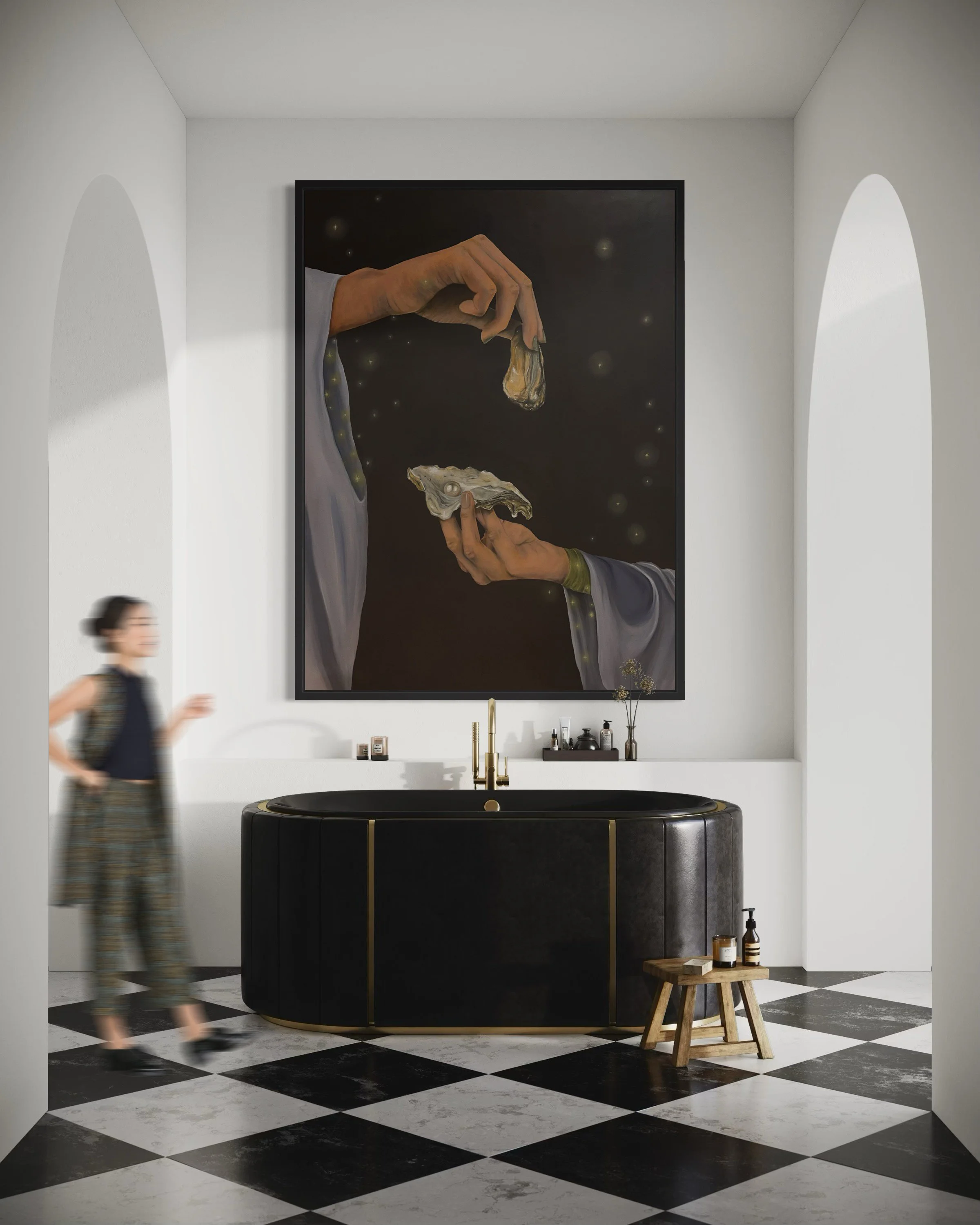
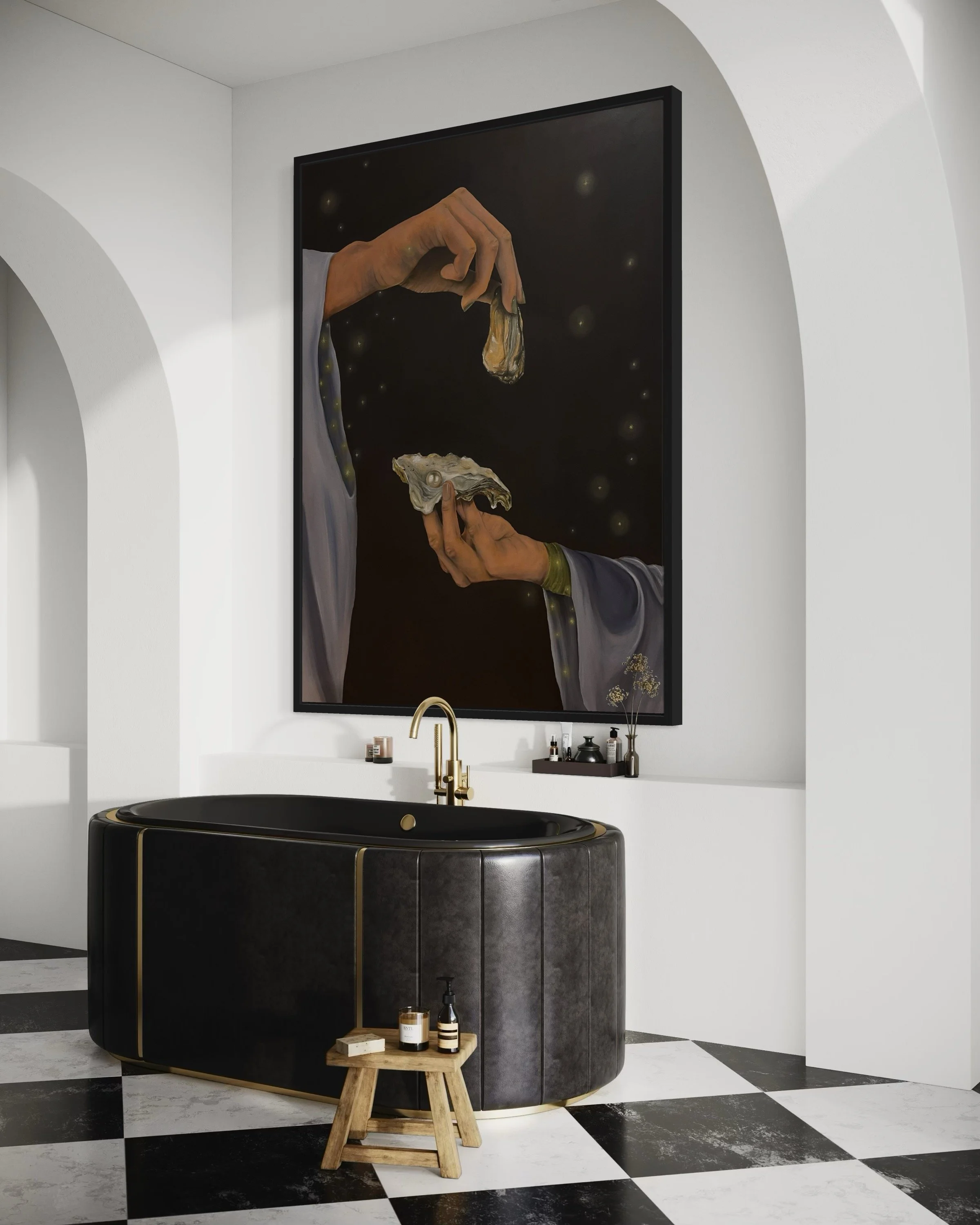
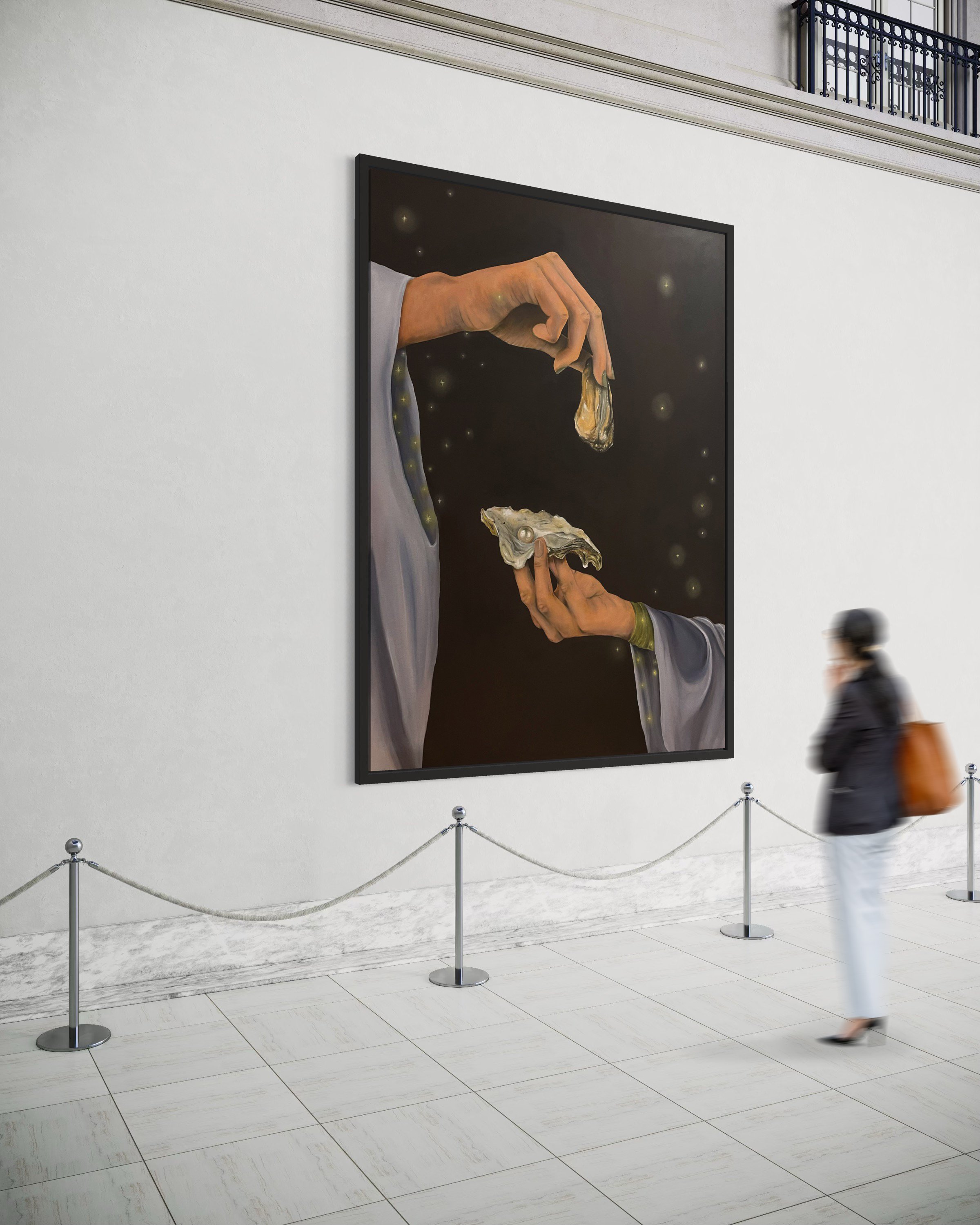
Pearls form through layers of nacre built around a wound — a grain of sand lodged in soft tissue. In a feminine context, this symbolizes how beauty is often born from pain, trauma, or endurance. The pearl represents how women are taught to polish their suffering into something others admire.
The oyster meat is raw, vulnerable, nourishing —yet also something that’s taken forcibly and consumed. It’s seen an object of great value, photographed, enjoyed for special occasions, but also violently opened. This reflects the physical toll of womanhood—menstruation, childbirth, aging, objectification, r*pe—things both deeply human and deeply politicized. Our suffering is on display, its touted as a political weapon. We were awarded as the prize after great battles, then discarded when men grew bored.
One hand gives aesthetic beauty. The other gives sustenance — or sacrifice. Femininity is expected to offer both: beauty to look at, and softness to feed on.
Even though the wound/sacrifice is ancient, the stars symbolize how the echoes of our womanhood can be heard throughout time. The Trojan woman that were enslaved and brought back to Greece, forced to carry and birth Greek children, they would still sing the songs of their ancestors. Their children would still know the songs of Lyrnessus or Troy, even though the cities were burned. The womb, or wound — a grain of sand lodged in soft tissue is also evocative of the Greek child lodged in their body.
I’ve been reading a lot of feminist philosophy and Greek history lately. This painting was born from those learnings.
192cm x 91cm
Recycled native timber frame - price on request.
Oil on canvas
Original and prints available
Pearls form through layers of nacre built around a wound — a grain of sand lodged in soft tissue. In a feminine context, this symbolizes how beauty is often born from pain, trauma, or endurance. The pearl represents how women are taught to polish their suffering into something others admire.
The oyster meat is raw, vulnerable, nourishing —yet also something that’s taken forcibly and consumed. It’s seen an object of great value, photographed, enjoyed for special occasions, but also violently opened. This reflects the physical toll of womanhood—menstruation, childbirth, aging, objectification, r*pe—things both deeply human and deeply politicized. Our suffering is on display, its touted as a political weapon. We were awarded as the prize after great battles, then discarded when men grew bored.
One hand gives aesthetic beauty. The other gives sustenance — or sacrifice. Femininity is expected to offer both: beauty to look at, and softness to feed on.
Even though the wound/sacrifice is ancient, the stars symbolize how the echoes of our womanhood can be heard throughout time. The Trojan woman that were enslaved and brought back to Greece, forced to carry and birth Greek children, they would still sing the songs of their ancestors. Their children would still know the songs of Lyrnessus or Troy, even though the cities were burned. The womb, or wound — a grain of sand lodged in soft tissue is also evocative of the Greek child lodged in their body.
I’ve been reading a lot of feminist philosophy and Greek history lately. This painting was born from those learnings.
192cm x 91cm
Recycled native timber frame - price on request.
If you are interested in purchasing this piece or a print, please contact me directly at s.wells.studios@gmail.com or text me at 027 262 6786